Showing posts with label seo. Show all posts

Wednesday, September 06, 2023

Turning Cold Traffic into Hot Leads: 10 Strategies That Work


In the ever-evolving landscape of digital marketing, one of the most critical challenges businesses face is converting cold traffic into hot leads. While attracting visitors to the website is essential, the real magic happens when you can turn those anonymous visitors into engaged prospects who are eager to hear from you. Let’s explore effective strategies to transform cold traffic into hot leads that can fuel your business growth.

Understanding the Cold Traffic 

Cold traffic refers to visitors who are unfamiliar with your brand, products, or services. They may have found their way to your website through various channels like search engines, social media, or online advertisements. These individuals are often at the top of your sales funnel and need some nurturing to become valuable leads.

The journey from cold traffic to hot leads is not a straightforward one, but with the right strategies, you can make it happen. Here are some proven techniques to help you convert those cold visitors into warm and eager prospects.


1. Create Captivating Landing Pages

Your website's landing pages play a pivotal role in converting cold traffic. When a visitor arrives on your page, they should immediately understand what you offer and why it matters to them. Make sure your landing pages are visually appealing, mobile-friendly and include a clear call-to-action (CTA) that encourages visitors to take the next step.

2. Offer Value Through Content Marketing

Content is king in the digital marketing world. Create high-quality, informative, and relevant content that addresses the pain points and interests of your target audience. Blog posts, videos, ebooks, and webinars are all excellent ways to provide value to your visitors and entice them to learn more about your offerings.

3. Implement Lead Magnets

Lead magnets are valuable resources or offers that you provide to visitors in exchange for their contact information. This could be a free ebook, a downloadable template, a webinar, or a newsletter subscription. By offering something valuable, you can entice visitors to share their email addresses and move them one step closer to becoming hot leads.

4. Optimize for Search Engines (SEO)

To attract and convert cold traffic effectively, your website needs to be discoverable. Invest in SEO strategies to ensure your content ranks well on search engines for relevant keywords. When people find your site while searching for answers to their questions, they are more likely to engage with your content and consider your offerings.

5. Engage Through Email Marketing

Once you have captured a visitor's email address, use email marketing to nurture the relationship. Send personalized and relevant content, offers, and updates to keep your audience engaged. Automation tools can help you segment your email list and deliver tailored messages to different segments of your audience.

6. Retargeting Ad Campaigns

Don't let cold traffic slip away after one visit. Implement retargeting ad campaigns to bring them back to your website. By showing targeted ads to people who have previously visited your site, you can remind them of your offerings and encourage them to take action.

7. A/B Testing and Optimization

Continuously test and optimize your landing pages, CTAs, and content to improve conversion rates. A/B testing allows you to compare different variations and identify what works best for your audience. Small tweaks can lead to significant improvements in conversion rates over time.

8. Social Proof and Trust Signals

Build trust with your cold traffic by showcasing social proof, such as customer reviews, testimonials, and case studies. Trust signals like secure payment options and privacy policies can also reassure visitors that their information is safe with you.

9. Personalization

Tailor your content and offers to match the specific interests and behaviours of your cold traffic. Personalization can significantly increase engagement and conversion rates by making visitors feel like you understand their unique needs.

10. Analytics and Data Analysis

Regularly monitor the website traffic, user behaviour, and conversion rates using analytics tools. Analyzing the data will help you identify what's working and where you need to make improvements in your cold traffic conversion strategy.

Converting cold traffic into hot leads is an ongoing process that requires a combination of compelling content, effective lead generation tactics, and constant optimization. By implementing these strategies, one can nurture the audience and turn them into valuable leads that contribute to the increase in sales. Remember that building relationships with your audience takes time, but the results are well worth the effort in the long run.

Friday, August 04, 2023

Tapping into the World of Voice Search: Optimizing for Voice Assistants


The rapid advancement of technology has fundamentally transformed the way we interact with our devices. One of the most groundbreaking innovations in recent years is the proliferation of voice assistants. From Siri to Alexa and Google Assistant, voice search has become an integral part of our daily lives, revolutionizing how we access information and interact with technology. As a digital marketing consultant, it's crucial to recognize the potential of voice search and its impact on the marketing landscape. 

The rise of voice search can be attributed to several factors, including the increased convenience and speed it offers compared to traditional text-based searches. Voice assistants have become smarter and more accurate in understanding natural language, making it easier for users to perform hands-free searches while on the go. Voice search is also gaining popularity due to the growing adoption of smart speakers and voice-activated devices in homes and workplaces.

According to comScore, by 2020, half of all searches are projected to be voice-based. This shift in consumer behavior presents an enormous opportunity for businesses to leverage voice search as a powerful marketing channel.

Let's explore the world of voice search and uncover effective strategies for optimizing your digital marketing efforts to thrive in this new era.

Understand User Intent:

When optimizing for voice search, understanding user intent is paramount. Voice searches tend to be more conversational and long-tail in nature. People are more likely to ask questions using natural language, such as "What's the best Italian restaurant near me?" or "How do I fix a leaky faucet?" To effectively optimize for voice search, businesses must identify and target the specific questions and queries that their target audience is likely to ask.

Focus on Featured Snippets:

Featured snippets, also known as "position zero" results, are concise answers to user queries that appear at the top of search engine results pages (SERPs). These snippets are often the answers that voice assistants read aloud when responding to voice queries. To increase the chances of your content being featured, structure your content to provide clear and concise answers to commonly asked questions within your industry.

Local SEO Matters:

Voice searches are often location-based, with users seeking information about nearby businesses and services. Optimizing your website for local SEO is critical for attracting voice search traffic. Ensure your Google My Business profile is complete and up-to-date with accurate location, contact details, and business hours.

Mobile-Friendly and Fast-loading:

Voice searches are predominantly conducted on mobile devices. Therefore, it is crucial to have a mobile-friendly website that offers a seamless user experience across all devices. Additionally, ensure your website loads quickly, as voice search users expect fast results.

Long-Tail Keywords:

Incorporate long-tail keywords into your content that align with conversational queries. People tend to use more words in their voice searches, and optimizing for long-tail keywords can significantly improve your chances of appearing in relevant voice search results.

Voice search is reshaping the digital marketing landscape and presenting businesses with exciting new opportunities to connect with their audiences. It's essential to embrace this emerging technology and optimize marketing strategies to cater to voice assistant users effectively. Understanding user intent, leveraging featured snippets, local SEO, and mobile-friendliness are just some of the key tactics to thrive in the world of voice search. By staying ahead of the curve and adapting to changing consumer behaviour, businesses can position themselves at the forefront of voice search marketing and reap the rewards of this transformative technology.

Friday, October 03, 2014

8 Tips for Better SEO for Startups

Startups are already bootstrapped and work on tight budgets. The co-founders work under immense pressure to get their idea to become a viable and profitable business. They focus more on product development and sales. Little or no focus is on website. Search Engine Optimization (SEO) is more economical and time consuming. But, if perfectly done then, it will pay off in a long run.

Here are simple 8 tips which involves little or no investment but, a bit of effort for startups to promote their business online.

1. On-page Optimization: To start with the on-page optimization need to be done perfectly. Identify the right and perfect keywords. I would suggest to target more on long-tail keywords. This will help in 2-ways. One, the competition for long-tail is less and it will be easier to rank on top in search engines. Two, it will attract the right audience for you business and the conversions are easy and quick. On-page optimization the very first and important step for SEO. A mistake done here will consume lot of time to correct it. As you will be on the wrong track from the start. Note that the objective here is just not to rank on top in Google. But, the website should rank on top in Google for the right keywords and phrases.

Weston Bergmann, lead investor in BetaBlox, which is an equity-based business incubator for startup entrepreneurs in Kansas City, compares SEO to a marathon:

"The most important thing to note about SEO for early-stage ventures is it's a marathon, not a sprint. I see too many people getting frustrated by a lack of stellar results in the first couple months, when this just isn't possible. These fights are long-term ones, so buckle down and stick to the basics. Eventually you'll look back and see that you've built a monster."Search Engine Optimization Bible written by Jerri L. Ledford, is a very good book to know and learn the basics of SEO. This book offers readers about what they need to write a SEO plan and implement a successful SEO program. It also provides useful and easy tips on getting the website to the top on SERPs, The sidebars provide more information and additional resources on the topic which are very helpful to a rookie.

2. Mobilize, Localize and Socialize: If your business is focus on your local area, try to have the content more relevant to the local area. It is always better to be on all the Google properties like YouTube, Google+, Google Places... Have a mobile friendly website / webpage as well. 
 
3. Launch Blog and Keep Writing: I am sure this is the one which will be ignore by most of the startups as this is more time consuming. But, this step is the next step for effective SEO after the #1 above. Search engines want to see more of fresh and quality content. Make sure the topics, titles and the posts again include the right keywords as far as possible.

Secondly, it is not necessary that the co-founders should only write the articles and post it. You can assign and pick someone within the organization or have a freelancer to write.

Lastly, have an option to share the blog articles over the social media. As the more the articles are shared and viewed, the more help it will do for SEO. For more details refer my article 'Is Content Still King?'.
 
4. Social Media Marketing (SMM): The content / webpage which is more talked and discussed about in the social channels is of more help in SEO. Be it a blog post, video, image, website link or a post in the social channel. Having something viral in the media will boost the search engine rankings. This does not just mean that you make a few post daily and it is done. One needs to check the followers, respond to comments. Also, need to see the mentions of the name of the startup or the business and initiate the conversation. The mentions in the social media are the right signals for the business.

I understand, this eats away lot of the valuable time. But, keeping aside an hour of your daily time for this will be beneficial for a long run. I would suggest not to outsource this to any agency as I believe, you are the one who knows the business well and understand the customers. Thus, the timely interactions can be properly done by you and will be effective. An hour a day is what is required.

Do not miss to read 'The Four Important Steps to Start Social Networking for Business'.

Also, one can answer related questions to their industry and business on Quora.com. Not only answer but, can ask relevant questions as well. Never know from where we can get traffic and customers. 
 
5. Startups Directories: There are many directories were the startup can be submitted. There are tons of them. But, I would suggest just pick the top few ones and submit your startup to them with a proper description and tags. Joining sites like Angel.co and Crunchbase.com will help. There are other few directories like Betali.st, Erli Bird, CSS Mania and more. Comprehensive list and experience of a startup is nicely given by RivalFox in the article 'Startup Directories: The Good, The Bad, and The Ugly'
 
6. News Media: When your product is almost ready and you are ready to spread the news about the startup do take help of the news channel. The timing needs to be right. Just do not be too early to disclose the idea and attract competition. Like directories, we have many news websites which give news related to startups and most of them do it for free. Here as well just focus on few good ones like Mashable, Venturebeat, Startupbeat, YourStory, Inc.com, Entrepreneur.com, Alltop....
 
7. Guest Blogging: Apart from the news channels, there are other bloggers who are interested to write about startups. It is just not about startups, but bloggers who write about the industry related to your business will also help.

Weston Bergmann of BetaBlox opines about guest blogging and he had this to add:

"Recently I've heard a lot of people say that guest blogging is dead. Well it's not. What's dead is spammy and manipulative link building techniques. What's more important than ever is high-quality guest blogging and thought leadership. If you're sharing high quality and exclusive content you'll be rewarded, not punished. Also, guest blogging shouldn't be a one-and-done thing; aim to write for the same publication multiple times."
 
8. Analytics and Metrics: Do not forget to analyze the traffic stats and the sources of these traffic. See which traffic is being converted and focus on generating more traffic from these sources. Google Analytics is the best free tool available and to start with the numbers which it provides is apt. If the numbers are read and interpreted well then, it will save lot of efforts and cost to the startup. This step is always ignored by most of the businesses.
 
Whether it's for a startup or a new business, these simple 8 steps will help your SEO or digital marketing efforts to be more successful. Of course, once you launch a business the keywords and content your care about may change, but the game remains the same.

Work at a startup? Ask questions or share your own experiences in the comments!


Sunday, September 19, 2010

How Can Google Instant Influence SEO and PPC


Something is always sure to come from Google. Google has come up with Google Instant last week.


What ever Google does it really affect the online marketers much. Every time one has to tweak the website to cope with the changes made at Google end.

According to Matt Cutts, the key insight behind Google Instant is to help the visitor to formulate search queries more quickly. Google typically returns search results in milliseconds, but it takes several seconds for us to type a query. In other words, the limiting factor on a typical search is the one who searches. With predictive search and instant results, you can often get the answer you want much faster.


So, how will this Google Instant influences on how we do SEO and PPC?

1. Keywords Stats: Over a period of time, people will get used to use it and will try to toggle around with the different key phrases suggested by Google Instant. Hence, one needs to concentrate on such keywords which are being suggested by Google Instant. Now, another question here is how will we know the number of times a key phrase has been searched in Google now? Because, by just using the ‘arrow key’ one can view the results (without actually hitting the ‘enter’ key). The challenge here is how Google will be able to give the marketers these numbers now (Also read point #5 below to actually know how to track the referral keywords which are not typed completely). In the below image you can see the search is made for just ‘is seo’ and by just using the ‘arrow key’ or the mouse cursor different results were displayed. This definitely reduces the time required to search a query.


2. Which Keywords to Concentrate: Now, look at the same example displayed above. I wanted to search for ‘is seo important’ and the suggestions give to me by Google were ‘is seo dead’, ‘is seo worth it’ and ‘is seo important’. Now, for which all phrases I should optimize my site for, when these phrases suggested by Google are antonyms. On the other hand, the user is deviated from the topic he is keen to find info for.

3. Distraction: I was trying to find ways to control termites using Google Instant. And, when I started typing it, Google suggested me the result for the film ‘The Terminator’ and I clicked and started reading it. So, Google Instant is not providing me the results of what I am searching for. So SEO folks, you also need to read the users’ mind and what all keywords are being suggested by Google Instant.


4. Long-tail Searches: The major problem I see is with long-tail searches. Websites which used to get benefited with the long-tail keywords will have to bare the brunt. As the searches for these keywords will reduce. More so, advertisers who used to concentrate on log-tail for Adwords will also see the referrals coming down drastically.

5. Tracking Google Instant in Google Analytics: With Google Instant, there are effectively two user queries. First, there is the full search query which Google proposes based on a user’s keystrokes and the second, is the partial search query actually typed by the user. Some have proposed tracking the partial query typed by a user by trapping a ‘oq= parameter’ or ‘which appears in the Google result link a user clicks on. Unfortunately, this tip will not work, at least not as things are currently. The ‘oq= parameter’ does not appear in the referrer string passed on to the target website using Firefox. Since it isn’t passed on the referrer, it cannot be tracked by web analytics tools.

6. CTR for PPC: Using the ‘arrow keys’ one can preview the organic search results. But, the Adwords ads are also getting refreshed and giving different results. So, this may increase the number of impressions for the results and thus, effect the CTR and so the CPC.

I see this change in reducing the required time users are taking to find the searched results than they currently are. I do not necessarily see it helping users find better results. The instant results will definitely have an impact on how people get to their final search results.

But, in the long run, this can only mean people searching for more relevant information, that is selecting the right key phrase suggested by Google Instant and the websites are properly optimized for these keywords, could actually deliver a more “informed” group of visitors to the website. But, time can only prove this.

Do let me know your thoughts and experince on the influence on Google Instant.


Wednesday, September 08, 2010

Online Marketing Scenario in Banking Business


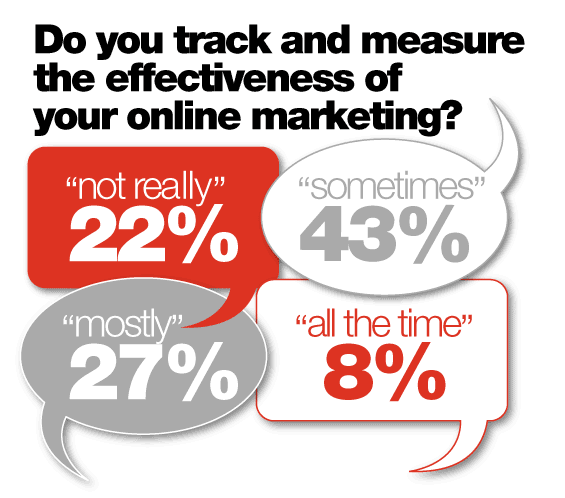
Majority of the bank marketing executives surveyed (include 49 retail banks and 93 credit unions) are not aware of how much their bank spends on online marketing. As per the Financial Brand’s author Jeffry Pilcher,


“Most financial institutions invest almost nothing in online marketing (or have no clue). This suggests one of two things. Either banks and credit unions don’t take online marketing seriously enough yet to invest in it, and/or they believe that online marketing doesn’t require a significant investment.”


Not only these. There are many more data points to look at.

  • They allocate around 5% of their marketing budgets to online activities
  • 22% do not track or measure their online activities, while only 8% do so all the time
  • 32% were not sure if their organization invests any money in online marketing
  • While most financial institutions embrace email marketing, a surprising 31% don’t.
  • 45% of banks and credit unions do not have online marketing staff at all
The other data points from the survey are 57% of banks invest in search engine optimization (SEO), while only 36% of credit unions do the same - a difference of 21%. By an even greater margin, banks are much more likely to utilize search engine marketing (SEM): 57% vs. 23%. Banks are 20% more likely to have microsites, and are 36% more likely to run banner ads than their credit union peers. Credit unions are less likely to have a mobile phone app. They are, however, more likely to have a blog, an online newsletter and ads in their eStatements. So, online marketing guys you sure have more business here. Catch them soon and if you get it, do not forget to call me for a drink.

What can be the reason as to why these banks are not using online marketing activities as other businesses do?

They seem to think that their customers and prospect already know them and their website and they hardly need to use Google to reach their website. They should understand that if they are not on top in Google or any other search engines for their business related keywords, then their competitors will sure be there on the first page and will be losing business to them. Lead generation for banks is the main source of generating business. Be it generating deposits, insurance, loans or credit cards. People still search on internet for better rates and services. If your website is not on top then your competitors website will sure be.

Being on Twitter or social media really helps to reach the public in much better way. It is a perfect channel to provide better customer service. But, it may hit you back if not done in a proper way.

PPC, banner ads, lead generation, blogging… there are many more channels to promote the banking business. They surely need to understand the results this media can get.

I will be interested to know what the readers will feel and please do comment your thoughts. Online Marketing channels is sure to be the low-hanging fruit opportunities for banks to further engage with their customers and the prospects but it is not being done.


Wednesday, July 21, 2010

White Label Websites and SEO


First of all let us know what this white label stuff is. A white-labeled website is eCommerce website which sells the products online just like the main site but, under a different domain name, brand or company name. It is altogether you have the same website, but with different skins. Usually, it is like selling the same products from different store fronts to different audience. This type of website should not be mistaken as an affiliate website but, they surely share some characteristics. They are particularly popular in the retail, travel and gambling sectors.

I would just like to list specific ways that can be used for white-label websites and how effectively they can help in your SEO campaign.

  1. Keyword-rich domain name: You may have your main website on your brand name or company name. To get the advantage of the keyword-rich domain name/s you have then white label website will be very helpful. Usually, this can be used to target the exact phrase that matches the domain name. Next strategy will be to dominate the first ranking page of the search engines using different domain names.
  2. Local Presence: If your eCommerce business requires a local touch and presence to a particular geographical area, then another brand or website which is a white label can be created having the local touch focused on localized audience. This will also help in ranking in geo-specific search engines and local search engines.
  3. Targeted Keyword Approach: Imagine you have to target 100+ keywords and this will require a lot of effort and time to rank on the first pages for all the keywords. On the other hand, imagine you have 100+ websites each catering to the target keywords. In other words you have 100+ home pages for specific keywords. In fact, to maintain these websites will be easy, as all the products and scripts will hit the same database. Thus, it not like owning 100+ website, but only one website.
  4. Link Building: White label sites will surely help in building links. As you will have more number of sites, with similar content you can surely exchange links among the different websites. Or most of the sites linking to the main site – or you can also try making a linking pyramid to help you in better ranking in search engines.

If you are building your own white-label domains make sure there is a damn good reason for you to host your content over hundreds of domains rather than just one. You need to take care your websites need not be considered for spamming. It is always better to have finite number of white label sites so that you can not only try getting better ranking in search engine, but can also share different percentage with your affiliates from these different sites. You can also try different marketing campaigns for different sites thus, will help you in lot of other ways as well. SERPS and search engine algorithms are unstable and unpredictable. It makes sense to maintain a multi-domain or even multi-brand strategy. This way you diversify your rankings and traffic sources thereby reducing risk. Thus, you have your eggs in different baskets.

White-labeling is surely going to rise in popularity and in some cases may even become an alternative to traditional affiliate marketing. Good examples of such white label sites – 888.com. They have quite a few white label sites like online-casino.com.


Read in detail on SEOmoz

Tuesday, July 20, 2010

Website Usability Checklist


Search engine optimization and other online marketing techniques get targeted traffic to your website. As per research, a visitor spends an average of less than 8 seconds on the web page. So, you have just less than 8 seconds for the visitor to do what you want them to do. Or else they will go away. So, you need to also pay proper and more attention how the website is treated by different visitors and the major portion of your visitors find the website navigation easy and comfortable. They should be able to use the site easily and should understand the content.

This is a simple usability checklist for the website.

1.      Have the navigation links easily visible. Visitors should know where they are and should easily find out where they have to go next. Also, they should know what all additional pages are there apart for the page they are on.
2.      The navigation links should be consistent and at the same place on all the pages. Visitors may get annoyed of the links appear and disappear unpredictably. The best practice is to use include files for the navigation system. This will ensure the changes made to this are effected on all the pages.
3.      Use appropriate anchor text. As the anchor text is important for search engine optimization, do not stuff them with main keywords without considering to which page it will lead to after clicking. Make the anchor text more meaningful at the same time so that the visitor will know where they will be moved to on clicking. Don’t keep them guessing as to where the link is going to take them.
4.      It is a normal practice to highlight the anchor text so that it conveys the message that the visitor has to click it. Usually, the anchor text is underlined or used in a different font or bold font. It is always a best practice to use CSS to emphasize the text links.
5.      You can use JavaScript or other scripting language to create menus for the navigational links. Just take care that the visitor can easily navigate through the link structure in the menu.
6.      Home page link is a must in the list of navigation items you have. Also, the logo should always be linked to the home page.
7.      Include site search box on every page of the website. If the visitor can’t find what they need, they should be easily guided to the search box. Moreover, if you refer the search keywords, you will know what information is searched more number of times and what should be made easily available to the visitor. Thus, prominently displaying the search box will help in improving a website.
8.      Always use breadcrumbs to let the visitor know on which page he is on and how they have navigated to the page.
9.      Always have your main content and call-to-action lines on the top or above the fold. Do not expect the visitor to scroll down, read and then click.
10.  Use proper background color and font color so that it gels with your brand and branding. Moreover, the content should be easily readable by the visitors.
11.  Always use ALT and TITLE attributes to all images. Some browsers may block images so in this case the visitor can read the ALT text.
12.  Have a custom error page that will help a visitor when clicked on a broken link or type the address incorrectly. The custom error page should be in synch with the website design and structure.
13.  Have a feedback form to always dope you with you information that will help you to increase the performance of the website. Try to improve the usability depending on the feedback you receive. The users of the site can tell you exactly how they are feeling about it.

Your website is designed just not for you but, for the ones who use it – your visitors who are your customers. A site that confronts to users’ expectations, makes them more comfortable and more compelling to visit again. Good usability is always critical to website’s business.


Don't Make Me Think: A Common Sense Approach to Web Usability, 2nd Edition

Tuesday, April 20, 2010

SEO: Search Engine Optimization Bible

SEO: Search Engine Optimization Bible written by Jerri L. Ledford, is a very good book to know and learn the basics of SEO. This book offers readers about what they need to write a SEO plan and implement a successful SEO program. It also provides useful and easy tips on getting the website to the top on SERPs, The sidebars provide more information and additional resources on the topic which are very helpful to a rookie.
SEO: Search Engine Optimization Bible
The main topics covered include –
  • Creating an SEO plan
  • Identifying and managing keywords
  • Maximizing pay-per-click strategies
  • Understanding the best practices for link building
  • Regarding search engine robots, spiders and / or crawlers
  • On-going process in SEO
  • Tracking and generating useful reports

 If you want to make SEO work for you, this is the book you need to succeed.

About the author, Jerri L. Ledford: She has been a freelance business technology writer for more than 10 years. During that time, over 700 of her articles, profiles, news stories and reports have appeared online and in print. Her publishing credits include: Intelligent Enterprise, Network World, Information Security Magazine, DCM Magazine, CRM Magazine, IT Manager's Journal. Jerri also authors corporate collateral -white papers, case studies, web content, and presentations. Her corporate clients include Switch & Data, The World Health Organization, FujiFilm, Coco-Cola, and NaviSite.

Wednesday, December 02, 2009

10 Tools for Website & Page Load Speed Tests

Google is trying to help webmasters to build efficient websites which can load faster. Also, Google's new algorithm addition can also check at the time taken by the web page to load. So, it is always a best practice to test the loding of the website. There are lot many tools available and here are the best ones which I like -
  1. Google's extension for Firefox - Page Speed
  2. Google Webmaster Tools
  3. Pingdom Tools
  4. WebpageTest.org
  5. Website Optimization Speed Test Tool
  6. WGET
  7. Uptrends Page Load Test Tool
  8. Submit Plus
  9. Link Vendor Speed Tester
  10. Self SEO website speed checker - check and compare speed for different domains at a time
More details are available here.

Tuesday, May 19, 2009

How to Grow Google Authority

Authority in a Search context takes into account all the elements of website and determines a grading system. The more authoritative and trusted website, the better it will rank in search engines. All this is on mere observation and is very unscientific. I just want the people who know here to do the talking.
  1. Linking Neighborhood: It is believed that the important factor is about who is linking to your website. It is believed that Google has a list of Whitelist of trusted websites, a link or two from these trusted websites will boost the ranking. So, anyone has the list of these trusted websites? To name a few – Dmoz, Yahoo directory, Wikipedia, news website, social networking and bookmarking sites like Facebook, Twitter, MySpace, Digg, StumbleUpon, Reddit, Mixx…more
  2. Buying Links: The Big G is always watching. So, do not just go and buy as many links as you want in one single day. Google watches the trend of the no. of links you are getting and decides the authority score.
  3. Bad Neighbors: If you do not buy links, and yet you are linked from websites using reciprocal link exchanges formula or having links on web pages which are link farms can make you lose the authority.
  4. Comments: Putting the link in ‘Comments’ section of blogs will help in getting traffic. But, can lose the authority. If at all you want to do this, then do it cleverly. Don’t make it look like a spam.
  5. Linking Websites: Google will check the IP of the website from which you are getting the links. Are the websites your own websites and/or hosted on the same server where your main site is? Or these links have grown up naturally?
  6. Content is King: As always, content is always and will always remain the king. Visitors should trust your website content and should provide an organic link to your website because they value your website’s content.
  7. Duplicate Content: Do not duplicate the content or reproduce the same content. You will lose trust.
  8. Subscribing RSS: As visitors value the content and want to keep themselves updated always, they subscribe the RSS. Thus, trusting the website and the content.
  9. Traffic Trend: Google also looks at the traffic trends. How the traffic is behaving? Does it spike at certain times and behaves normal on other times? If spikes then why? If it is growing, then is it growing organically?
  10. Brand Search: If many people are searching for the brand name in Google, then it is a good sign. It adds a value to the authority.
  11. Domain Extensions: Easy to get domain extensions will not be as important as .edu, .org, .gov.
  12. Age of the Domain Name/Website: The older the website or the domain name, the better is the trust.
  13. Expiry of Domain Name: The later the expiry date, the more trust one can have in your website.

As already said, these are just on observations, so to summarize everything stated above that will convey the same results are:

  1. Have a natural and organic growth always with a sound promotional behavior
  2. Good, unique and valuable content presented specifically for visitors to read and not for search engine robots. And the content needs to be refreshed regularly
  3. Have a trusted infrastructure. By this I mean, good life for the domain name, quality hosting service providers, good neighbors…

Wednesday, May 13, 2009

What Can Be The Search Algorithm for Twitter Search?

I was searching for a post using Twitter search and it just came to my mind, what algorithm the search can use to give quality results. As of now, Twitter finds keywords in the text of the most recent Tweet. Often, the search results are repetitive or duplicate and not much relevant to the keywords. Jayaram, VP, Operations for Twitter (an ex-Googler) hopes to change all that by taking Twitter search beyond this, by looking at the pages people are linking to within their Tweets. A Twitter crawler will visit the links, index the page and then correlate that 3rd-party content with the Tweet itself. This should help make for more relevant Twitter search results.

This also made me think of more ways the algorithm can be set and I started comparing the organic search engine algorithms with Twitter search, and I have come up with these few assumptions.
  1. Follower counts: I guess follower counts do not really matter as an important factor to be considered in the search algorithm. It really does not prove, if you have thousands of followers, you contribute quality tweets. And, if I have very few followers, it is not that my tweets are quality tweets.
  2. Synergy of Tweets: I think the synergy of your tweets and that of your followers and that of your followers’ followers, should be considered as a factor. (In organic SEO - To have links on websites which have similar content and the link building strategy).
  3. Groupies: Say, most of the employees of a corporate are on Tweeter and they follow one another, then this really forms a closed group with known people together exchange good, informative and quality tweets.
  4. Tweet and URL Synergy: The synergy between the tweet and the web page that is linked in the tweet should matter. Just the case in PPC ads – the text ad and the landing page should talk the same thing.
  5. Frequency of Tweets: You already know the more you tweet, the lower the tweet goes on your follower’s account and the lesser the visibility it gets. And the tweet gets diluted in the number of tweets you have.
  6. Age of Tweet: The latest the tweet, the important is the update. But, how the tweet-bot will identify the spammy tweet to the original tweet is a big question.
  7. Tweet Favorite: It will really add value to the tweet, if the tweet has been marked as favorite by other folks. Bookmarking?
  8. Subscribing RSS: Yes, your tweets will be really important if you people subscribe them through RSS. People really will like you to know your updates instantaneously.
  9. Keyword Density: The density of the keyword among all the tweets over a period of time can be considered as a factor. You may know a lot of information about the keyword and are tweeting about the same and the updates can be informative. Or should it consider the density of the keyword in that particular tweet?
  10. Age of Tweet account: It does not matter when you created an account in twitter and when you have started tweeting. There can be many accounts which have been created and yet no tweets but, the handle can have followers. Tweets from such handles can’t be quality ones.
  11. Re-tweets: Just to spam and get more clicks, there will be people who just re-tweet the same thing again and again. So, this has to be take care of and should not be considered for ranking. Rather it should be considered as spam. Also, linking the same url to different tweets should be spamming.
  12. IP Address: It should note the no. of handles or IDs being logged in from the same IP address. People may have multiple IDs and would be using to promote their website using them. Such IDs need to be penalized.
  13. Geo-targeted: Track the IPs of the users they are tweeting from or logging from. And show the results to the members who are searching from that geo areas. This way the results are geo-targeted.
  14. Demographic profile: Twitter can have an advantage here over Google. They can target the ads or websites as per the demographic profile – age, gender, place, income etc.

These are just my assumptions and thinking. And I would like you to come up with your points and opinion as well to make this post very informative.

But one thing that is most important is, Twitter can be an enormous source of traffic to a website if it is handled well in the social media more so in Twitter.

Friday, April 10, 2009

How Google's Rankings Algorithm Has Changed Over Time

Rand in his blog has clearly represented the algorithm changes of Google over the past few years in a graph. This clearly shows the trends that happened over the years. It is a great way to communicate the changes with this small graph which says all. As it is said – pictures tell a thousand words.

According to Rand, Domain Trust/Authority is playing lot of role in SERPs. My question here is how does Google measure the website’s domain authority? I guess an authority domain is generally one with large number of pages, is popular with more visitors, has lots of inbound links, its content is frequently updated and re-indexed. This means to achieve domain authority, you need to do the other SEO techniques mentioned in the graph as well. All other techniques lead to domain authority.

And I guess no one exactly knows how or at what stage a domain or website acquires authority. If an article is published in such authority website, it will generally start ranking for its keywords relatively very fast compared to something similar published in a non-authority domain. So it boils down to what matters is where the content or link is published rather than what it is.

Wednesday, March 25, 2009

Is The Recession Good For Freelancers?

The news has really turned from bad to worse. Organizations are cutting down costs and are having tight marketing budgets. The challenge is that, they really need to be in touch with their customers at this point of time and build the awareness in the market. They also have to fight the competition and I think this is the best time to do so.

But, with this tight marketing budget, will they be able to do all this? They may cut down on advertising, but not online. Corporate would like to do more marketing and outreach to keep their clients. They will see for channels where they are sure to get a decent ROI. Email marketing, search engine optimization and social media marketing will be the mantra for them.

The current economic conditions and layoff of staff will trigger outsourcing. Tight budgets will make them look-out for freelancers or contractors rather than organizations who can do this.

@Freelancers - this recession can be good news for you. Let me know if it has really increased your work and dollars. And beware, the laid-off folks can join the freelancing bandwagon.

Also, the websites which offer freelance work sites may be making good business now :).
In the past few months, the number of new users has almost doubled or increased on the four leading sites: Elance.com, o’Desk.com, Guru.com and Helium.com.

Thursday, March 05, 2009

The New "Brand" Algorithm of Google

There are all sorts of speculation about the signals Google using to define a site as being a brand will deserve a boost in SERPs. It seems overnight many big brands came up to the first page on Google without any SEO tweaks done to their website. Last month Aaron Wall from SEOBook posted his opinion about the change in the algorithm. The few examples which he has referred are about American Airlines, Delta and North West Airlines have come to the first page of Google for the search keyword ‘airlines tickets’ which was not the case earlier. Even Hallmark.com recently started ranking on first page for the keyword ‘gifts’.

If Aaron is correct then - Is Google giving more credit to the brands? Is it considering that only big brands have original and quality content? Do people look only for brands when they want to search? If I wanted to search for a website of certain brand, I would rather type the brand name as the keyword in Google and directly go to the website. Instead of ‘airlines tickets’, I would rather type ‘Delta airlines’ or American airlines’ and go to their website. I will not rather search for just 'airlines tickets' and check for Delta.

In India SearchMasters 2009 which happened recently in Bangalore, India, Adam Lasnik did mentioned in his Q&A session that, in the title tag, it is always good to use the Company’s name and location where it offers the products and services to be mentioned. I am wondering if he was pointing it to this algorithm change. If we add the company or brand name to the title tag are we not wasting the main real estate here? Adam Lasnik says no. Google considers stuffing of keywords in title tags as spamming. I believe if the brand is well known then it makes a lot of sense to put your brand in the page title or meta description tag. It might help to get clicks and even when it does not at least it helps aid awareness. On top of that, if it builds good CTR then it will help in personalized search.

Another sad news and set-back I see for small players is that they have to build their brand image to beat these brand company’s websites in Google’s result pages. The fact is that it’s just plain hard to define the strength of a local brand using an algorithm or a robot visit.

Few tips to minimize the effect of this change in the algorithm (these are just my guesses now and I have never experimented them). Follow them at your own risks.

  1. Frame your title tag with your company’s name and in short provide the product or service you are offering. If possible mention the local area as well. Example: Company Name: Your product/service description and location. Something like - Northwest Airlines - Airline Tickets, Plane Tickets & Airfare.
  2. Have a short and meaning full description which clearly summarizes the page content/product/service which you have on that page. If description tag is missing and/or is not relevant to the content that is available on that page, Google will take the description for your website which is on DMOZ.org (if at all your website is listed there).
  3. Never use the same title and description tag for all the pages of your website - as usual.
  4. Focus on long-tail keywords as this is more advantageous now. eMarketers.com research showed that more and more people are using long-tail and this will increase in coming months.
  5. Concentrate on local search optimization.

These are just the two cents. And it is too early to suggest any solutions about this change. I am just trying to guess the relationship between what Adam Lasnik talked during the session and this algorithm change.


Latest Important Update: Matt Cutts of Google made a video talking specifically about this change. Matt said, they made a "change" but he wouldn't call it an "update", but rather a "minor change." In fact, in Google they call it the Vince's change. In short, he said this impacts a relatively small number of queries, not the long tail ones and it is more about "trust," the "quality" of the page, the page's "PageRank" and "value" then about brands.

One example he gives at 2m12s) is that if you type in eclipse into Google, the first result is not from Mitsubishi. So he says it is not "brand" focused but more about trust.

Thursday, February 26, 2009

Tools To Analyze Competitors’ Website Traffic

-->

Here is a list of websites/tools to analyze other websites' traffic and traffic sources. Few of them also provide additional details like traffic trend over a period of time, link popularity... A couple of them provide you details of keywords used in Adwords by your competitors. So, go ahead and use them for SEO and PPC and kill the competitors if you can :). If you don't beat the competition using PPC or SEO then you are giving business to your competitors. So, better know the competitor website's performance and then analyze your online marketing strategy to over shadow them. More over these tools are still free to use.

Alexa.com - Compare traffic and trends of websites up to three websites. Provides Alexa rank, reach and page views of the websites. But, I guess it takes data only from the visitors who have the Alexa toolbar.

Google Trends – use commas to compare unique visitors to multiple sites.

Quantcast – Will be helpful if at all the competitors are “quantified”. Also, you need to register to get the complete report.

Spyfu – One can know the keywords the competitor is bidding on Adwords.

Compete.com – They claim as - Competitive metrics for every site on the web powered by the largest pool of online consumer behavior data in the industry. Here again the competitors need to have considerable traffic for Compete to track it down. Basic numbers are free, but to get more traffic details you need to purchase monthly subscription ranging from $199 to $499 depending on the data you want.

comScore - Is definitely not cheaper and not completely accurate either. I think they use an aggregate data, based on what is available to them.

Hitwise - Hitwise reports offer a concise analysis of market trends in any one of Hitwise's 160+ industry categories or on thousands of categorized websites. Again it is not a free tool. You can contact them with your specific needs and numbers you are looking for and they can very well make a customized report for you. One can try for it in case you have the budget.

Popuri.us - A tool to check at-a-glance the link popularity of any site based on its ranking (Google PageRank, Alexa Rank, Technorati etc.), social bookmarks (del.icio.us, etc), subscribers (Bloglines, etc) and more. This tool may not provide updated results.

MarketLeap – Is a leading provider of integrated digital marketing solutions. They have three different tools to check the link popularity trends, search engine saturation and keyword verification. Of course this can be had manually using Google, but using these tools you can see the trend and compare websites.

Website Grader by HubSpot - Website Grader is a free seo tool that measures the marketing effectiveness of a website. It provides a score that incorporates things like website traffic, SEO, social popularity and other technical factors. It also provides some basic advice on how the website can be improved from a marketing perspective. This can be used as a reference to know how websites have performed over a period of time.

dataopedia.com - Gathering together data from more than 50 sources, dataopedia.com is an aggregation web service that lets its users find out all the valuable facts about any website, such as traffic, online buzz, contact information, popularity in social bookmarking services…in short, all the essential facts about every website you can come across on the internet. dataopedia.com has been conceived as the one-stop-resource for finding website facts.
It's always better to use a composite of all the sites above, to give you a general sense. None of them are completely accurate. dataopedia.com summarizes most of the stats and trends from various sources (compete.com, Alexa..) at one place and it is very easy to see the performance of various sites on one screen/browser.

Let me know if I have missed any good websites here. If so, I will add them as soon as possible so and it will help all of here in the online marketing world.
-->

Sunday, February 15, 2009

Can a small card solve your problem?


Yes, a small plastic card was my most loyal and dependable thing in the journey which solved my major problems.

I just wanted to share this with you all folks... may be this is a bit deviated from the main purpose of the blog. BUT, I just wanted to share how searching on Google solved my problem. Thanks to Google.

The card I am talking about is the calling card purchased online from a UK Calling Cards online shop.

I landed in UK and the main purpose of my travel was to give a surprise to my friends. So, they really do not know that I am already in London. When I landed, to my surprise, I found I was out of money and my debit card has only a balance of 20$.

I just thought that I am pauper now and I did not have anything than open my laptop and browse through. What I did - I went to Google and searched for cheap calling cards. Yes, I used cheap because, you should understand my problem. And I reached a website which has a vast variety of calling cards. More over, I can call from UK.

The solution was using the Google power to find a UK Phone Cards shop to buy them online and make a call to a Amy (my best friend who stays in UK) and ask her to come and pick me up and help me out.

So, to summarize the story - On Google, I typed cheap calling cards, I reached the UK calling cards website - http://www.eurocallingcards.com, I used $11 from my debit card to purchase a good calling card. And I was on the go to talk to Amy.

After talking to Amy, I was surprised that I still had balance on my debit card (of about $9) and also on the calling card. I did not wait longer and I called my family in India and other friends in UK.

So, I learnt - Google and SEO can be your friends and can rescue you in times you are in problems.
>

Friday, February 13, 2009

SEO Job site


Good news to SEO and SEM guys in India. Especially those who want to aspire their career in search engine optimization. There is a dedicated website only to post SEO and SEM related jobs - SEOJOBS.in

This makes me imagine, how far will SEO and SEM will go. I guess this will become the next most wanted skill set, just like software skills. Good to know that India's online marketing is spearing ahead.

Google India Search Masters'09


Glad to inform you that Google will have the Search Masters'09 in their office, at Bangalore on Feb 28. I guess it will have loads of information about the webmasters tools and we will know how to exploit the webmasters tools and resources available there. More over, they have a session on Google's new custom search which I would love to know more about.

If you are in Bangalore don't miss it - SearchMasters'09

SearchCamp 2009


I have been reading the emails of the guys which are working hard and effciently to make this session a great one. These young chaps are enthusiastic and trying all contacts and exploiting all enrgies to make this a succesful one.

SearchCamp is a two day event aimed to bring together the best minds from the Search Engine Marketing space to talk about search engine advertising, including optimization and marketing issues. The event is scheduled for the 28th February & 1st March 2009 at Chennai.

Cheers and best wishes to the team.

Search Engine Marketing 2010

I have a strong feeling that local search optimization will be the real beast which will be more complex and challenging than SEO of a website or a dynamic website. I was just browsing and thought the below few points can be the tips for local search optimization.

So, here are my two cents -

Some tips here can be -

1. To have the keyword in the business name (similar to have keyword in the domain name in SEO)
2. To have a business name which is alphbetically on the top. Ex. to have a business name starting with number(s) 0 or 007 :)
3. To have multiple listings in local areas/cities where one can provide the services (this again is similar to link building)
4. To provide better customer service and request satisfied customers to rate you (I can say PageRank here)
5. In your ads on local search directory, include all the names (or different names the area is known for) of the lane or road your office is located at.
5.